What Does High-Impact Teaching Actually Look Like in the Classroom?
High-impact teaching is a set of evidence-based routines used consistently in every lesson: a Daily Review to start, explicit teaching of new content in small steps, full participation so every student responds, and regular checks for understanding. In 2025, 78% of teachers who completed Teach Well's Masterclass Series reported improved academic progress for their students.
"High-impact teaching" is used a lot in education circles. It turns up in strategic plans, PL flyers, and school improvement documents. But ask ten teachers what it actually looks like at 9:05 on a Tuesday morning, and you'll likely hear ten different answers.We think that's worth unpacking. Since 2019 we've worked alongside more than 8,800 teachers and leaders, and what we've seen again and again is that the biggest gains don't come from knowing more about good teaching. They come from what happens in the room, lesson after lesson. So instead of another definition, let's step inside a classroom where high-impact instruction is part of the everyday and look at what's going on.
The first five minutes
Students walk in and they already know what to do. Books open, pencils ready. Within a minute or two, the whole class is working on a short Daily Review.Daily Review is a handful of quick questions on content from yesterday, last week and last month. It's low stakes and brisk, and because it happens every single day, it adds up. Barak Rosenshine put daily review at the top of his Principles of Instruction for good reason. Each time students pull prior learning back out of memory, it gets a little stronger, which leaves more headspace for whatever's new.Teachers in our Masterclass Series often tell us this is the change they'd never give up. One Foundation teacher described Daily Review as "like a secret glue that brings everything together." A Year 6 teacher found that "lesson starts were calmer with consistent entry routines, increasing time-on-task."If you were standing at the back of the room, you'd see every student writing and nobody waiting. The teacher is already moving between desks, glancing at answers and quietly noting who might need a hand today.
Introducing something new
When new content comes in, the teacher leads the learning. Students know what they're learning and what success looks like. The content arrives in small, manageable steps, and the teacher models it first, thinking aloud and working through examples before handing over.Watch me. Let's try one together. Now you have a go.This is simply working with how students learn. New learners can only hold so much in their heads at once, and explicit teaching keeps that load manageable. One Year 2/3 teacher in our network tracked her class's narrative writing over four months. They started out meeting the benchmark in 5 of 10 areas and finished at or above it in 9. Her explanation: "regular use of explicit teaching, clear learning intentions and success criteria, and modelled writing."
Every student, every question
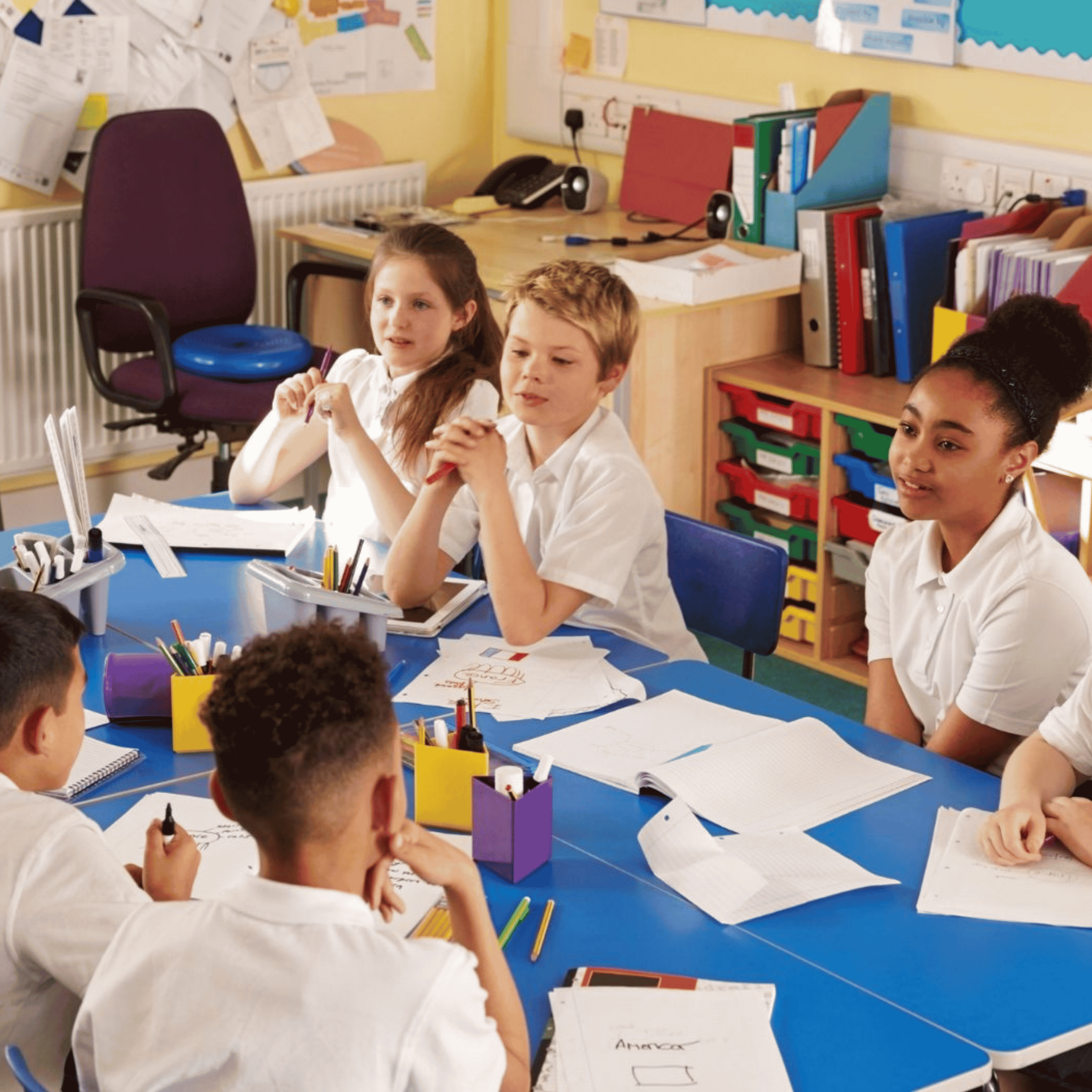
This is where a high-impact classroom feels most different. The teacher asks a question and every student is expected to have an answer ready, not just the three hands that shoot up first.At Teach Well, we call this full participation, and it's built on simple routines that students get used to quickly:
- Non-Volunteers: names are drawn at random, so everyone prepares a response.
- Pair Share: students talk their thinking through with a partner before anyone shares with the class.
- Active Tracking: students follow the text with a finger or ruler as it's read aloud.
- Whole-class responses: everyone shows an answer at the same time, so the teacher can see the whole room at a glance.
Plenty of teachers will recognise these. As Sonia Venour, Acting Deputy Principal at Our Lady of the Sacred Heart College, put it: "Many of the strategies are not new but it gives a clear name and identifies the WHY they are successful based on the data."Students notice the shift, too. One Year 5 student said they liked it because "more kids are participating rather than not and then hoping someone else will volunteer." Another told us it was making them "braver with learning." We love that one.
Checking in along the way
High-impact teachers don't wait for the end-of-unit test to find out who's got it. They check in all through the lesson with a quick whole-class response, a well-placed question, or a look over shoulders during practice. Then they decide what happens next: reteach, try another example, or move on with confidence.Over time, this helps close gaps within a class. Several teachers in our 2025 Impact Report saw their strongest gains among students who started below the class average. A Year 7 maths teacher, for example, found the spread of achievement in their class had narrowed over the year, with one student making more than 22 points of progress on PAT Maths.
High expectations, warmly held
Underneath all of this is a classroom culture where every student is expected to give their full attention and best effort, and the routines make that possible for everyone. It feels purposeful and positive, and students tend to enjoy it.Our 2025 Masterclass participants showed how much this can shift:
- 90% of teachers now accept nothing less than full attention and effort from all students, up from 76% before the course.
- 83% say their students are busy learning and don't lose time, up from 69%.
Students' views of themselves moved as well. After their teacher completed the Masterclass, fewer students agreed that "there is a limit to how much I can learn." For us, that's one of the most exciting results in the whole report.
When the whole school teaches this way
One high-impact classroom is great for the students lucky enough to be in it. When every classroom works this way, students move from room to room and year to year without learning a new set of routines each time, and teachers can coach and support each other using the same language.Barbara Iffla, Principal of Jolimont Primary School, says the biggest impact has come from "having our whole school staff trained by Teach Well, ensuring common practice and language throughout the school." In 2025, Jolimont was one of only two WA primary schools named among the state's 30 high-achievement schools for NAPLAN. Over at St Joseph's, Hindmarsh, Rita Garreffa says the shared language and consistent approaches "have helped align teaching practices and improve student engagement and outcomes."Across 2025, 98% of Masterclass participants told us they changed their daily teaching practice, 93% saw student engagement improve, and 78% reported better academic progress for their students.
So, what does it look like?
From the doorway, it can look fairly ordinary. A calm start and a quick review. Clear explanations. Every student thinking and answering. Regular check-ins, and high expectations held with warmth.There's nothing flashy about it, and you don't need to be a born performer to do it well. These are practical, learnable routines that any teacher can build and a whole staff can share. That's how we get closer to excellent teaching in every classroom, every year.Ready to bring these routines into your own classroom? Explore the Masterclass Series in High-Impact Instruction.